Bielański Hospital has completed a package of investments co-financed by the National Recovery Plan (KPO) and the budget of the capital city of Warsaw. The projects, with a total value exceeding PLN 100 million (and according to the headline data of the publication, even over PLN 110 million), focused on strengthening oncology, cardiology, and the digitalization of hospital systems. A key outcome of the work is the creation of new wards, the implementation of surgical robotics, and the purchase of hundreds of units of modern medical equipment, which is intended to improve the availability and comfort of treatment for residents of the capital.
Oncology and Robotic Surgery
The oncology project consumed the largest part of the expenditures, with an estimated value of over PLN 58 million. These funds, divided into PLN 50 million from the KPO and PLN 8 million from the city budget, allowed for a comprehensive modernization of infrastructure and the purchase of 142 units of medical equipment. As part of the works, a new Day Chemotherapy Ward was established, which enables the conduct of treatment without the need for multi-day hospitalization of the patient. This solution increases the availability of services and improves the comfort of persons undergoing therapy.
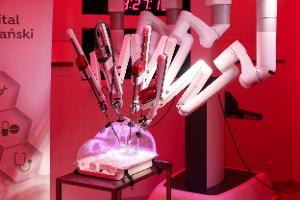
Diagnostic capabilities were also significantly expanded by modernizing the endoscopic area of the Gastroenterology Department. Modern diagnostic and procedure rooms were created there, intended for the detection and treatment of cancers of the digestive tract and the performance of minimally invasive procedures. One of the most symbolic elements of the project is the launch of the Oncological Robotics Center. In the prepared specialist infrastructure, the da Vinci surgical robot is now operating, used in the treatment of cancers. Thanks to minimally invasive robotic procedures, it is possible to reduce surgical trauma and speed up patients' return to normal activity.
It is also worth mentioning the modernization of the Pathomorphology Laboratory, where digital solutions enabling the electronic processing and sharing of histopathological preparation images have been introduced. Such digital diagnostics facilitate consultations between specialists and potentially shorten the time needed to make a therapeutic decision.
Strengthening Cardiology
The second pillar of the investments concerned the development of cardiology. A project worth PLN 28 million (PLN 20 million from the KPO and PLN 8 million from the city) allowed for strengthening the hospital's potential, which functions within the Level II of the National Cardiac Network. A key element of the changes was the establishment of a one-day sub-department of interventional cardiology with eight care positions. Thanks to this, some procedures can be performed without longer hospitalization, which accelerates the treatment process.
The Electrophysiology Laboratory was also expanded, creating a second, fully equipped operating room along with the purchase of, among other things, an angiograph. This solution enables an increase in the number of ablations (i.e., procedures for treating heart arrhythmia) and broader use of modern therapy methods. The equipment expansion also covered the Cardiology Department, the Intensive Cardiac Care Unit, and a specialist outpatient clinic. Almost 80 units of new equipment arrived at the facility, including cardiomonitors, infusion pumps, echocardiographs, and ECG and blood pressure Holters.
Digital Transformation and AI
The third area of change was digital transformation, implemented both at the main headquarters on Cegłowska Street and at the Warsaw Women's Health Institute on Inflancka Street. Two projects with a total value of over PLN 22 million included the expansion of hospital information systems and server infrastructure, which affects the more efficient processing and storage of electronic medical documentation. New cybersecurity mechanisms were also implemented.
Particular attention was paid to preparing the foundations for the use of artificial intelligence in imaging diagnostics. Systems supporting the analysis of X-ray, computed tomography, and mammography studies were developed, creating a basis for further implementing modern e-health solutions.
Financial Context and Assessment by Authorities
In total, Bielański Hospital obtained over PLN 88 million net of EU funds within the framework of KPO projects, while the city allocated nearly PLN 20 million to cover non-eligible costs. Vice-Mayor Izabela Marcewicz-Jendrysik emphasized that the total value of KPO projects in all city hospitals exceeded PLN 400 million, of which nearly PLN 350 million constitutes KPO funding, and over PLN 50 million is the city's contribution.
The Deputy Mayor indicated that these investments directly translate into the safety and quality of life of residents, developing medical infrastructure and increasing access to specialist treatment. Ewa Malinowska-Grupińska, Chairwoman of the Warsaw City Council, noted that this was an application initiated by the Council, in which all council members expressed their consent, while also thanking the institutions that contributed to financing the projects. Katarzyna Kacperczyk, State Undersecretary in the Ministry of Health, drew attention to the difficulties arising from time pressure and the need to negotiate funds within the KPO program, expressing admiration for the pace of work implementation in the city hospital. Jarosław Jóźwiak, Chairman of the Health Committee of the Warsaw City Council, assessed that the investment really raises the standard of healthcare, covering the entire treatment process from diagnosis to therapy selection.