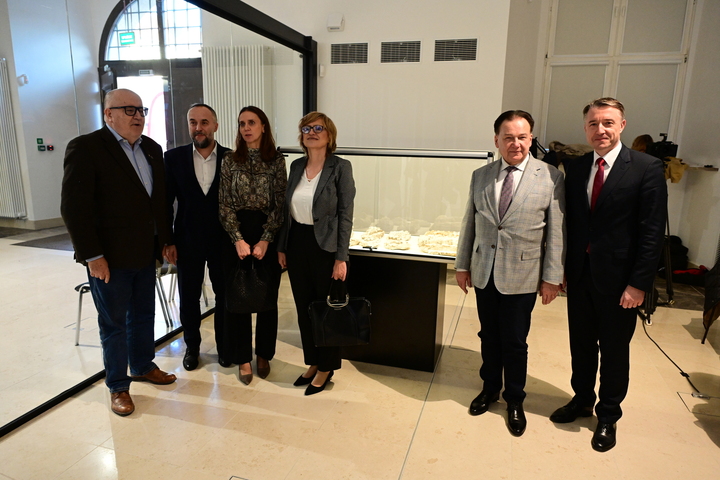
On November 5, 2026, it was announced that comprehensive archaeological research conducted at 9 Świętojerska Street in Warsaw before the construction of new headquarters for the Mazovian Voivodeship Sejmik and the Court of Appeal had been completed. The work was carried out by the Society of Archaeologists; it lasted from June to mid-October of this year. Its completion opens the way to construction works, which are planned to finish in the second half of 2029.
Investment project
The future investment site will include two seven-storey buildings, with six above-ground floors and one underground level. The building for the Mazovian Voivodeship Sejmik is to have more than 6,800 m² of usable area, and the new headquarters for the Court of Appeal—more than 5,300 m². Between the buildings, a publicly accessible plaza with greenery and small architectural elements is planned.
What the excavations revealed
During the work, archaeologists uncovered and documented traces of the former built environment of this part of the city. The excavations allowed the identification of foundations of tenement houses, side buildings, and outbuildings, cellars, a historical well, and elements of old sanitary infrastructure. According to sources, discoveries from the sides of Długa, Świętojerska and Nowiniarska Streets show how the built-up area developed and densified.
Finds from different eras
On the construction site, lead musket balls were found, which may be connected with the Warsaw Insurrection of 1794. The excavations also yielded brick foundations that may be remnants of a 17th-century forge, as well as a deposit of stucco work and stone details, including fragments with cross motifs and a plaque dated 1863. Lithographic stones associated with the activities of Bolesław Wierc's printing house were also discovered.
Traces of everyday life and occupation
Archaeologists recovered numerous everyday objects, including fragments of ceramics, porcelain, stove tiles, tobacco pipes, and coins. Of particular significance is most likely a passage leading to or from the Warsaw ghetto, which, according to sources, may have been used by smugglers during World War II.
Further works and disruptions
Further analysis of the documentation and archaeological material may take up to 2–3 years. The contractor is now to begin construction of foundations, the underground structure, and earthworks. Increased truck traffic, temporary occupation of part of the road reserve, and local pedestrian disruptions are expected. Crossings and traffic routes through Świętojerska, Telakowska and Freta Streets are to remain open.