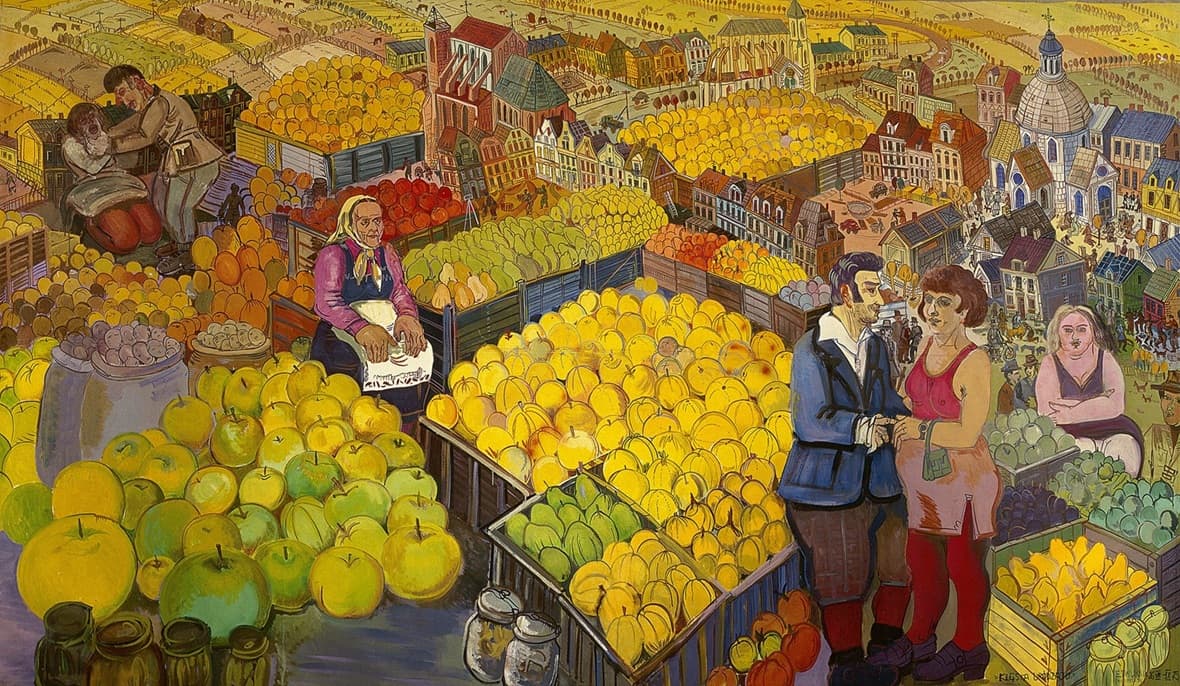
The Museum of Contemporary Art in Warsaw invites visitors from 31 July 2026 to 28 February 2027 to an exhibition titled "Duma i wstyd" (Pride and Shame), dedicated to the work of Edward Dwurnik. Housed in the institution's premises at 103 Marszałkowska Street, the exhibition focuses on the artist's works created in the 1970s and 1980s, with particular emphasis on two key painting cycles: "Sportowcy" (Athletes) and "Robotnicy" (Workers). While the presentation has a retrospective character, its goal is not merely to catalogue the works, but to provide an in-depth analysis of the painter's artistic stance and its impact on contemporary reflection on Polish identity.
Artistic and Ideological Context
The curators' starting point was the desire to reconstruct the sources of Dwurnik's artistic stance, which was shaped at the turn of the 1960s and 1970s. According to the source material, this artistic formation was based on a decisive rejection of the elitism of art. Dwurnik drew on the tradition of outsider art, treating painting as a tool for documenting social life.
In his concept, a painting served as a realistic medium participating in social life. The painter viewed painting as an egalitarian language that enables communication with the portrayed individuals. For Dwurnik, art was a way to express and build community, which distinguished his approach from more hermetic, elitist currents in contemporary art.
Social Themes and Class Advancement
The exhibition goes beyond a mere retrospection of the painter's work, becoming a pretext for a discussion on broader transformations in Polish society. The display addresses the issue of the experience of social advancement and the deep class changes that have taken place in Poland over the last half-century. This is a key issue for the shaping of Polish identity after 1989, making the exhibition not only an artistic event but also a historical and social reflection.