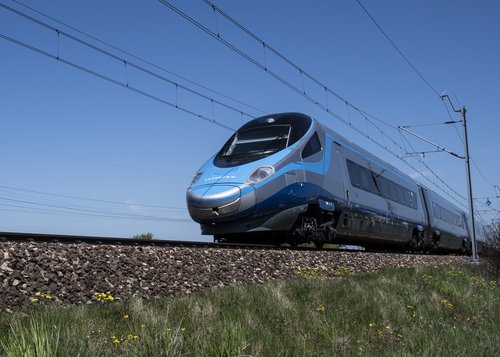
Polskie Linie Kolejowe (PKP) has completed tests of the digital GSM-R communication system on the Central Rail Corridor (Centralna Magistrala Kolejowa, CMK). The results confirmed the proper functioning of the infrastructure at a speed of 250 km/h, a key assumption for further work. This success opens the possibility of moving to the next implementation stage, namely tests of the ETCS Level 2 system. Implementing higher speeds on selected sections has a significant impact on travel time, especially between the capital and southern Poland.
GSM-R and ETCS Tests
The successfully completed GSM-R trials are a necessary condition for starting tests of the European Rail Traffic Management System (ERTMS) Level 2, also known as ETCS. Both systems form an integrated whole that increases safety and enables trains to be operated at higher speeds. According to sources, after the completion of ETCS tests and certification, the Railway Transport Authority (Urząd Transportu Kolejowego) is to issue a permit for the admission to service of the “Control – trackside equipment” subsystem. Only after obtaining these formalities will the line be ready for regular traffic at a speed of 250 km/h.
Shortening Travel Time
Launching trains at a speed of 250 km/h on the section between Grodzisk Mazowiecki and Zawiercie will bring concrete benefits to passengers. As stated in the announcement, a Pendolino train will cover the 224 km distance in 57 minutes. For travelers, this means that travel time between Warsaw and southern Poland could be shortened by up to 25 minutes. This speed is described as historic for Polish railways in terms of operational use on this route.
These actions are part of a broader railway infrastructure development program aimed at increasing throughput and accelerating connections on the country's main communication arteries. PKP President Piotr Wyborski emphasized that the company is consistently carrying out successive tasks to ensure that the CMK is prepared for the safe operation of trains at higher speeds.