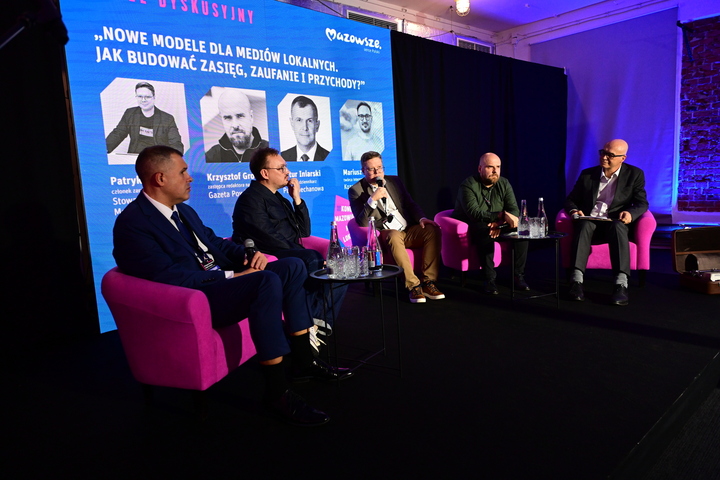
The third edition of the Congress of Mazovian Local Media concluded in Warsaw, bringing together more than 100 journalists, publishers, media researchers, and industry experts in one place. The event, held on October 29, 2026, became a forum for discussing the key challenges facing local journalism in the face of rapid digitalization and the growing scale of disinformation. Participants focused on the practical aspects of newsroom operations, with a particular emphasis on artificial intelligence tools and methods for building trust with audiences.
Artificial Intelligence as a Tool, Not a Replacement
One of the main threads of the congress was the impact of AI technology on daily media work. During extensive workshops led by Paweł Szczyrek and Paweł Nowacki, together with Jarosław Śliżewski, the ways to utilize artificial intelligence in the creative process were discussed. Paweł Szczyrek, a representative of the agency Ideo Force, emphasized that automating certain technical tasks and organizing content with the help of AI can free up journalists' time, allowing them to focus on delving deeper into topics and finding new narrative angles.
Speakers unanimously pointed out that while these technologies significantly streamline newsroom work, they cannot replace key human actions. Krzysztof Grodek from "Gazeta Powiatowa" noted that AI can help in data analysis, but it will not replace a journalist during interviews with witnesses or verification of information at the source. A similar stance was presented by Artur Iniarski from "Puls Ciechanowa," who warned that artificial intelligence should not undermine the value of original reporter material.
Market Challenges: Falling Sales and Digital Potential
The debates also covered the state of the Polish media market. Data from the Polish Readership Research indicates an unfavorable trend in the print press segment: the average sales of regional newspapers in the first quarter of 2026 was 2,766 copies, representing a 16 percent drop compared to the previous year. Despite this, the importance of digital channels is growing. In the Mazovia region, there are internet portals regularly visited by over half a million unique users monthly, which testifies to the potential for building a new, digital audience.
Participants of the "New Models for Local Media" panel deliberated on how to combine growing popularity on the internet with maintaining credibility and the stability of the business model. Patryk Ślęzak from the Association of Local Media called for an omni-channel strategy combining print press with a presence on web portals and social media. He also highlighted the need for greater state involvement in supporting reliable local media and the development of mechanisms regulating the use of their content by AI models.
Credibility as a Competitive Advantage
A central argument emerging from the congress was the thesis that in the era of widespread disinformation, credibility is becoming the main asset of local media. Speakers emphasized that closeness to residents and knowledge of local affairs allow for the building of trust that lacks in algorithms or anonymous online accounts.
Mariusz Kozak, the well-known creator of the "Kozacka Warszawa" profile, pointed to authenticity as the key to success in the digital world. "On the internet, style, personality, and authenticity count. That's the kind of creators audiences choose," he emphasized. He also stressed that he does not create reality, but shows it as it is, which builds lasting relationships with the audience.
Credibility is also crucial for the financial aspect. Artur Iniarski pointed out that the trust of the local community and business partners is the foundation of the operation of free press. Krzysztof Grodek added that local media, thanks to their sense of responsibility for published content, become a synonym for reliability, allowing them to effectively contrast with the wave of disinformation.
The Fight Against Disinformation and Author Meetings
The congress also included workshops dedicated to the resilience of the local community to disinformation. Experts advised how to recognize fake news and conduct a substantive dialogue with audiences. It was noted that the goal of journalists should not be to forcefully persuade a group of people completely closed off to arguments, but to provide reliable information to those who are open to a factual debate. It is precisely this majority of recipients that determines the quality of public discourse.
The events culminated in a conversation with Filip Springer, titled "Looking Carefully. About Mazovia, Space, and People." The meeting aimed to reflect on the art of noticing topics that often slip by in the daily rush of information.
The institutional patrons of the congress were the Faculty of Journalism, Information and Bibliology of the University of Warsaw and the Warsaw Branch of the Polish Journalists' Association.