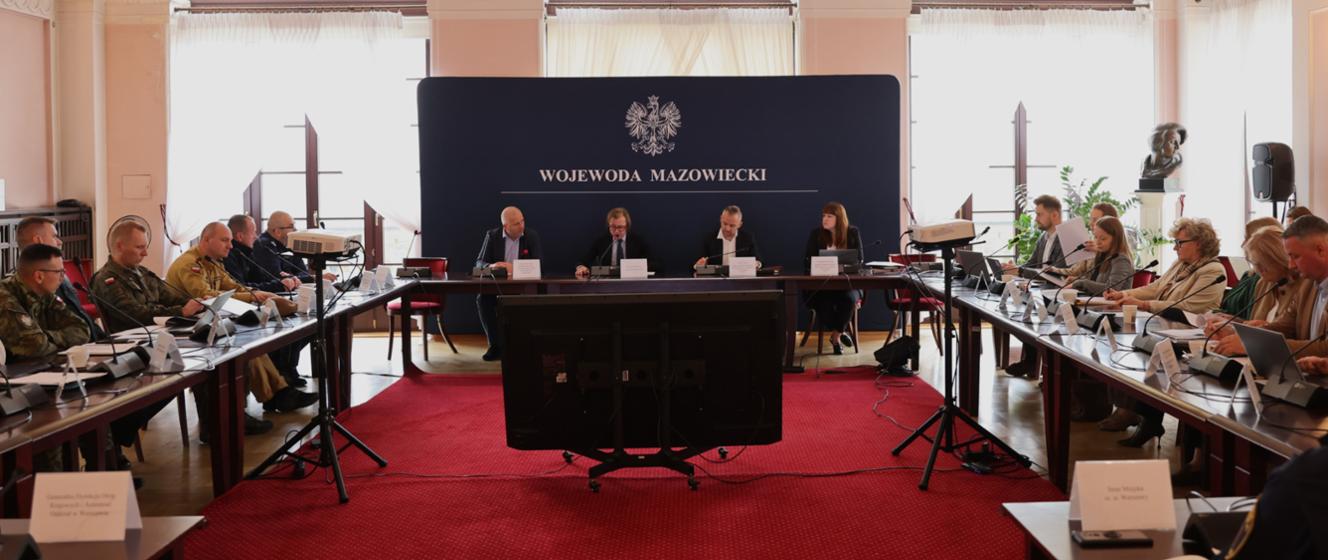
On October 30, 2026, a session of the Mazovian Voivodeship Crisis Management Team took place, chaired by Mazovian Voivode Mariusz Frankowski. The main purpose of the meeting was to assess the readiness of services to cope with the approaching winter season. Key topics of discussion included methods of supporting people in homelessness crisis, ensuring safety in road and rail transport, and countering epidemic threats such as avian flu.
Shelter and assistance for people in crisis
An expanded support network for homeless people will be launched in the capital. Over 100 facilities have been prepared in Warsaw to provide assistance, including offering overnight accommodation. Additionally, a mobile assistance point will operate in the capital, allowing support to be provided directly on the streets. The police actively monitor locations where people in crisis may be staying and conduct informational activities, directing those in need to appropriate centers. Persons seeking information about available temporary shelter spots can use the hotline number 987. The Voivodeship Office in Warsaw ensures supervision of facilities included in the register and reminds municipalities of their statutory obligation to provide such assistance.
Road and rail infrastructure
To ensure smooth traffic on the roads of the Mazovian Voivodeship, 56 million PLN has been secured in the budget for winter infrastructure maintenance. The General Directorate for National Roads and Motorways (GDDKiA) will begin preparing the road network for winter conditions from mid-November. The scope of work includes, among other things, roadside works and securing road salt supplies. Regarding road transport safety, the Voivodeship Road Transport Inspectate plans to conduct vehicle inspections, with special attention to coaches transporting children and youth. One of the regular inspection points in Warsaw is the location near Torwar.
Specific preparatory steps have also been taken in the rail transport sector. The number of locomotives designated for clearing snow from tracks and for assisting in the evacuation of damaged trains has been increased. These actions aim to ensure safe conditions for passengers during the frost. In difficult weather conditions, railway stations will remain accessible to travelers even during scheduled technical breaks, allowing them to take shelter from the cold.
Water safety and poultry farming
Autumn and winter are periods of increased risk on frozen water bodies. The Water Volunteer Rescue Service (WOPR) is running a nationwide educational campaign called “Fragile Life” (Kruche Życie), aimed at raising awareness of the dangers associated with walking on ice. Ice may appear stable, but its strength can be variable and depends on temperature, currents, or vegetation. As part of the campaign, meetings are organized, and cooperation with schools is undertaken to teach residents appropriate reactions in dangerous situations.
In the context of public health, particular attention is paid to the growing number of avian flu cases, especially during the autumn migration of wild birds. The Voivodeship Veterinary Inspectate conducts epizootic monitoring, herd supervision, and eradication of potential disease foci, establishing areas subject to restrictions. Parallelly, on a European scale, the European Food Safety Authority (EFSA) and the European Commission are running the “No Bird Flu: Protect Your Farm!” initiative. Its goal is to promote biosecurity standards and educate farmers and society on reducing the risk of avian flu virus spread.
Decisions
Securing 56 million PLN in the Mazovian Voivodeship budget for road safety during the winter period
- Decision to prepare the road network by GDDKiA from mid-November
- Decision to increase the number of locomotives for clearing railway tracks