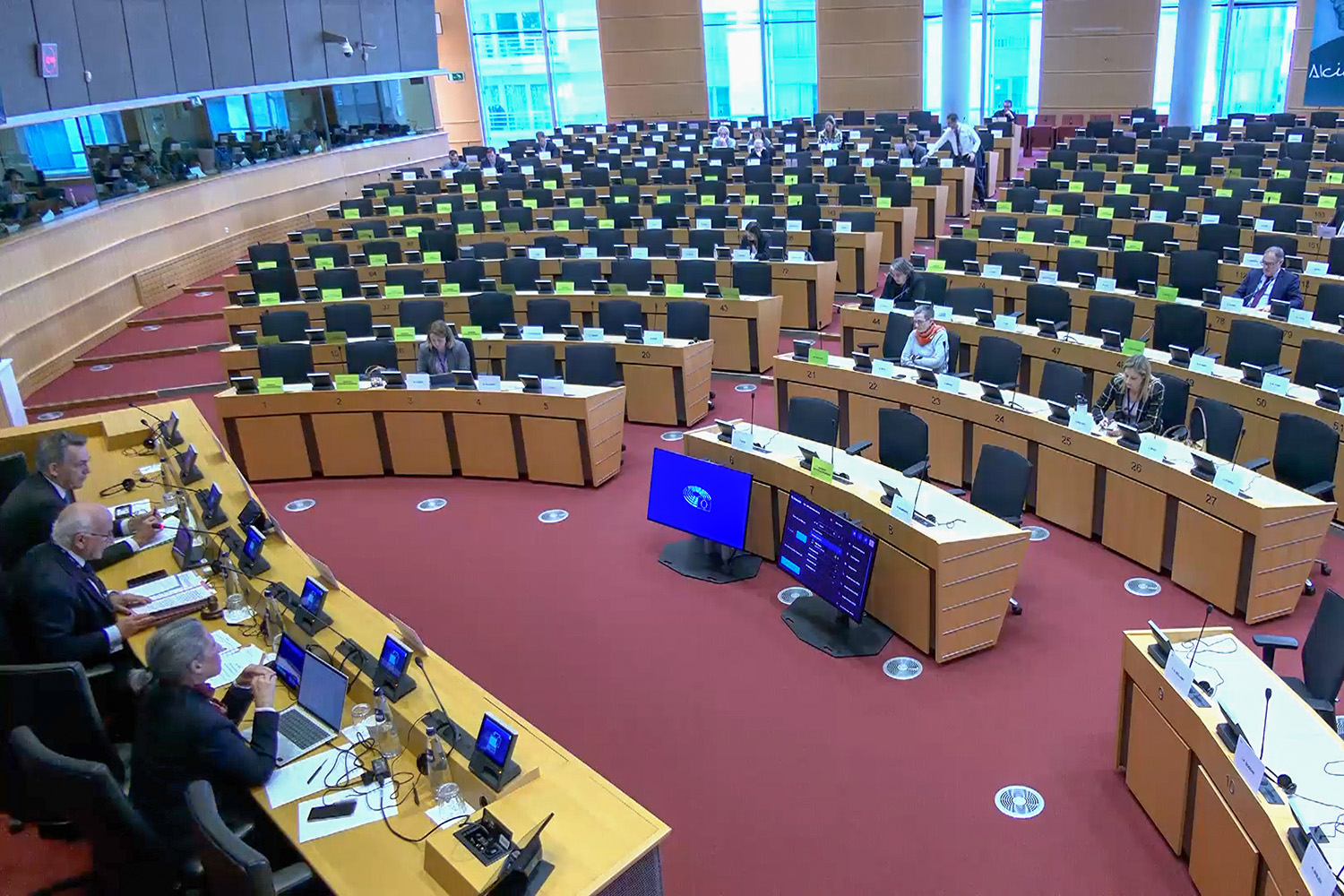
On November 5, 2026, a debate on the effectiveness of the fight against international drug trafficking took place during a session of the Committee on Civil Liberties, Justice and Home Affairs (LIBE) of the European Parliament. The main topic of the meeting was the industrial production of synthetic drugs in the European Union and the need to strengthen police cooperation. The event featured Supt. Senior Insp. Michał Aleksandrowicz, Head of the Department for Combating Organized Drug Crime of the Central Bureau of Investigation of the Police (CBŚP), who represented Polish law enforcement authorities and chaired the European Multidisciplinary Platform Against Criminal Threats (EMPACT) platform on synthetic drugs.
Scale of the Phenomenon and Poland's Role
In his speech, the CBŚP representative pointed to a fundamental change in the nature of the European drug market. The European Union has ceased to be merely a consumption market for substances smuggled from other continents, becoming a significant center for their manufacture. As reported in the European Drug Report 2026, of the 63 production sites for synthetic cathinones reported in the EU in 2024, 47 were located on Polish territory. These data illustrate the scale of the phenomenon and emphasize that Poland is dealing with one of the largest production centers for such substances in Europe.
Aleksandrowicz noted that criminal groups use advanced industrial facilities and specialized chemists, creating complex supply chains. Illegal production poses not only threats to public health but also serious ecological consequences. Laboratories generate large quantities of toxic waste, and production processes carry fire and explosion risks. The CBŚP representative emphasized that the social and environmental costs of this activity are borne by society as a whole, while the profits are reaped exclusively by criminals.
Results of Operation OSA
The debate discussed specific results of investigative actions, citing the example of Operation OSA. The operation was conducted by the CBŚP in cooperation with Ukrainian law enforcement agencies. Three illegal laboratories producing, among other substances, methadone, mephedrone, and alpha-PVP were dismantled. Police arrested 15 individuals involved in the illegal activity.
The scale of the evidence secured was impressive. Officers confiscated 268 kilograms of methadone and 153 kilograms of alpha-PVP. They also secured over 430 liters of post-reaction mixtures and more than two tons of various chemicals and precursors. Particular attention was drawn to methadone, a synthetic opioid dangerous to life and health when used without control. The success of Operation OSA was presented as proof of the effectiveness of international cooperation in combating organized criminal structures.
EU Law Reform and the Role of the EMPACT Platform
A key element of the presentation was the discussion on the reform of EU regulations concerning chemical precursors. The day before the debate, on November 4, 2026, the European Parliament committees voted by a large majority in favor of supporting the report on new regulations in this area. The rapporteur for the LIBE committee for these proposals is Member of the European Parliament Bartłomiej Sienkiewicz, whose involvement in legislative work was appreciated by the CBŚP representative.
The legal changes aim to restrict criminals' access to substances necessary for drug production at the acquisition stage. Properly designed administrative mechanisms can constitute an effective barrier, making it difficult to launch illegal production lines. Aleksandrowicz emphasized that the goal of security policy should not only be to react to existing threats but also to preventively cut off criminals from chemical resources, thereby preventing the establishment of new laboratories.
The European Multidisciplinary Platform Against Criminal Threats (EMPACT) plays an important role in these actions. Poland has played a leading role for years in coordinating the priority on synthetic drugs and new psychoactive substances. The CBŚP representative drew attention to the need to ensure stable funding for this mechanism and increase flexibility in implementing joint operations. The Pact on Threats Related to Synthetic Drugs, adopted by the Council of the European Union in June 2025 during the Polish presidency, was also cited. This document identifies EMPACT as one of the key operational tools in the fight against this threat.
The debate concluded with a reflection on the sustainability of anti-drug measures. As noted, measuring effectiveness solely by the number of arrests or dismantled production points is insufficient. Key is the permanent disruption of the operating mechanisms of organized criminal groups, including their logistical and financial infrastructure. The CBŚP representative indicated that the greatest success is not a record seizure of drugs, but effective prevention, whereby no further laboratories are established due to a lack of access to precursors. The experience of the Polish police is being used to build a more effective response across the European Union to contemporary security challenges.