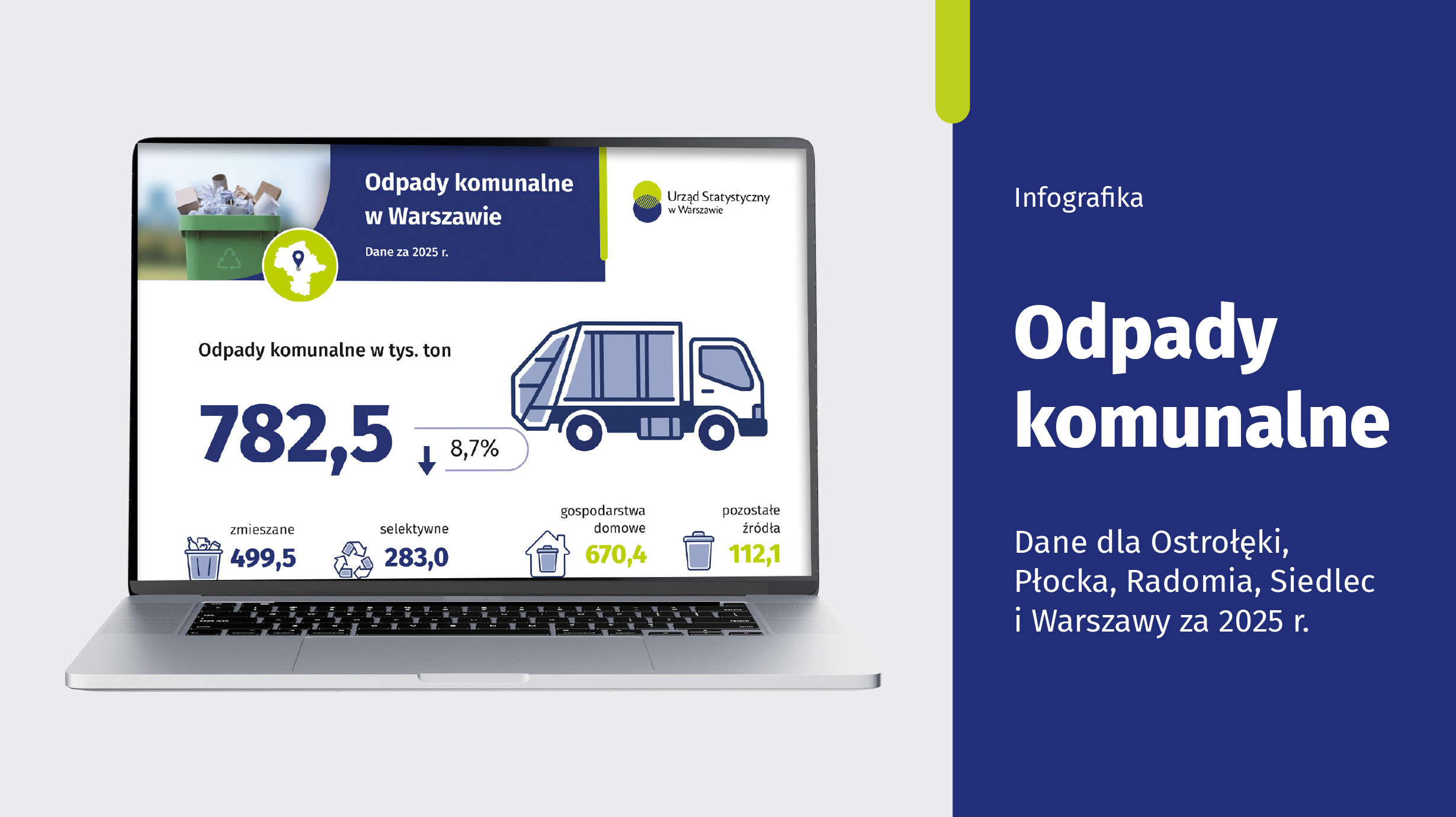
The City Statistical Office in Warsaw presented the results of measurements regarding the quantity and structure of municipal waste generated in the capital in 2025. The publication titled “Municipal Waste in the City of Warsaw in 2025” contains detailed statistical data that allows for an assessment of the dynamics of waste management over recent years.
Scale and Dynamics of Waste
According to the published data, the total mass of municipal waste generated in Warsaw in 2025 was 782,53 thousand tonnes. This value is lower than in the previous year, confirming a downward trend in waste quantities compared to 2024. When calculated based on the population, statistics indicate that the average amount of waste per capita in the capital amounted to 670.4 kg.
Structure of Selective Waste
An analysis of the waste structure reveals how residents sort the waste they generate. Among the selective waste group, plastics accounted for the largest share, reaching a level of 33.9%. The second largest component was paper and cardboard waste, accounting for 12.0% of this fraction. Waste Electrical and Electronic Equipment (WEEE) was also distinguished, constituting 9.3% of selective waste. In the case of glass, its share in segregated waste was lower, at 5.5%.
Mixed and Biodegradable Waste
A significant portion of the total mass of municipal waste is accounted for by mixed waste, i.e., unsorted or mixed waste. It comprised 8.7% of the whole, which translates to 359.7 kg per person. On the other hand, a large part of the waste was subject to recycling or biological treatment. Biodegradable waste accounted for 40.8% of all municipal waste in Warsaw. Meanwhile, bulky waste, which requires special transport and disposal, accounted for 20.8% of the total waste mass.