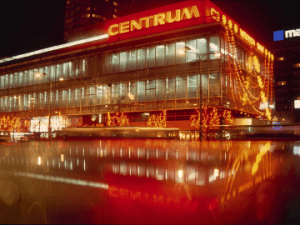
A new exhibition titled “Wieloznaczna. Fenomeny Warszawy” (Ambiguous. Phenomena of Warsaw) opens at the Warsaw Museum. It will be on view from October 29, 2026, to April 25, 2027. The exhibition represents an attempt to look at the capital from several different perspectives, combining historical threads with the personal experiences of its inhabitants. The curators’ goal is to open a space for dialogue about what distinguishes Warsaw and how its image changes in the eyes of different generations.
Six Thematic Zones
The exhibition was created through the cooperation of the Warsaw Museum team with experts, artists, and the public. The creators emphasize that the display does not limit itself to dry historical facts or descriptions of monuments, but also reaches for the emotions and memories that accompany people in their daily lives. The whole has been divided into six clearly distinguished thematic areas: Identity, Memory Forum, Diversity, Prestige, Bonding Agents, and More Than a City.
The first zone, Identity, focuses on the history and role of the city, tracking the dynamics of Warsaw's transformations over the centuries. In this part, visitors have the opportunity to point out their own symbols of the modern capital, which is meant to emphasize the subjective dimension of urban identity. The neighboring Memory Forum reminds us that history is not a closed and final chapter, but is subject to constant reinterpretations. As stated in the source material, this part of the exhibition also refers to moments when residents actively participated in shaping the city's fate, with the post-war reconstruction serving as a key symbol.
People and Their Everyday Lives
The Diversity zone refers to the multitude of identities and forms of memory that come and go with successive generations. The organizers draw attention to the role of residents in shaping the face of the city, presenting the stories of specific individuals. These are juxtaposed with objects from museum collections and works by artists co-creating the exhibition. This approach is intended to make the audience aware of how much the city depends on the individual experiences of its regulars.
Meanwhile, the Prestige section addresses the issue of Warsaw as a place attracting people with the promise of social or material advancement. Speakers point out that this advancement often turns out to be fleeting, and signs of status can change rapidly. Hence, the question arises about the price of the city's further expansion, and about what is currently considered a measure of success, and what can be a source of a sense of failure among residents.
In the Bonding Agents zone, the emphasis is placed on places of everyday presence that, although often less visible than monuments, play a key role in building community. It is in such spaces that close relationships and a sense of belonging are shaped. The exhibition encourages visitors to supplement the general picture of Warsaw with their own personal memories associated with these places.
Companion Programme
The culmination is the “More Than a City” zone, which treats Warsaw not only as a physical space but, above all, as a network of interpersonal relationships. The daily choices, disputes, and cooperation of residents create urban reality on an ongoing basis. The last part of the exhibition poses the question of the audience's role in this process, encouraging them to actively develop urban narratives.
The exhibition is accompanied by a rich program of events. As part of the activities, Sunday curator and author-led tours are planned, during which the creators will share their perspective on the city and tell about the behind-the-scenes work of creating the exhibition. The organizers also anticipate thematic workshops, referring to individual exhibition zones, as well as debates devoted to various aspects of Warsaw's functioning. Students form a separate group of recipients for whom dedicated educational activities have been prepared as part of cooperation with schools.